Star Trek Voyager: Season 1

In some ways it’s impossible for me to give this show an objective review.  I watched many episodes when I was in high school, then re-watched the entire series a few years ago, and subsequently watched the entirety of Next Generation, Deep Space Nine, and Enterprise as well.  But going back and re-watching Voyager has, in some ways, actually helped me be more critical in reviewing it.  Having a much greater perspective than I did a few years ago, with respect to science fiction and the Star Trek universe overall, I am actually enjoying the show far more than I originally did.  In fact, even more than Deep Space Nine, it is a worthy successor to the legacy left by Next Generation.  But while it gets many things right, it also does not innovate in the same way that Deep Space Nine did, and while the show often feels fresh and interesting, it is also more iterative than innovative.  Nonetheless, Season One got things off to a fairly good start despite some missteps, and laid some impressive groundwork for the seasons to follow.

Voyager debuted on January 16, 1995, almost one year after All Good Things… and sci-fi fans, still wistful over the final voyage of Picard and Company, while also a tad angsty from the first few lackluster seasons of Deep Space Nine, were eager for a return to the single space-faring vessel concept pioneered by Gene Roddenberry decades earlier.  And for better or for worse, Voyager in essence gave them exactly what they wanted:  a lone ship of exploration, more or less seeking out new life forms and new civilizations, boldly returning from an area of space where no one had gone before.  Having recently watched the exploits of Archer and his crew in Enterprise, a series with a big budget, top-notch special effects, but mediocre plotlines and forgettable characters, I was a little anxious at returning to Voyager.  Would it hold up against the test of time, or would its scars show through as I had gained a more critical eye for these sorts of things over the years?  Returning to favorable times gone by is dangerous, as some movies and TV shows just don’t age well.  But Voyager, surprisingly, remains as interesting, exciting, and even fascinating as it did when I was a wide-eyed 15-year-old kid watching the series premiere for the first time.

Star Trek Voyager Season 1 Crew

The crew of Voyager. And yes, it was difficult to locate a picture from Season One (i.e. without Seven of Nine).

The basic premise for the show is fairly simple:  Voyager, an Intrepid-class starship fresh out of spacedock, ends up on the other side of the galaxy and its crew, led by captainatrix Kathryn Janeway, gots to find its way back home.  As (bad) luck would have it, a ship of Maquis, the closest thing Star Trek has to terrorists, are trapped out there with them and both crews have to not only share the same starship, but learn to work together and respect one another if they want to make it back home in one piece.  Sound like an after school special?  You bet, but such is the nature of the best of Star Trek–lessons about humanity wrapped in a cloak of space exploration and otherworldly aliens.

Though Season One has its rough times, its focus remains primarily on what makes Star Trek, and all good science fiction, great:  the characters, and by extension, the exploration of the human condition.  When one strips away the special effects, what’s left is a group of interesting, though a tad contrived, individuals who must learn their place on the ship as well as their place in the world.  The mix of Maquis and Starfleet personnel on Voyager creates some compelling conflicts, particularly in the final episode Learning Curve, where several Maquis must learn to work within Starfleet rules while, at the same time, Tuvok, the rigid Vulcan security officer, learns there are times to bend the rules too.  It’s this type of give-and-take that is vintage Star Trek, and it’s nice to experience it all over again.

Commander Tuvok

Vulcan Commander Tuvok: If you've got a problem, yo, he'll solve it.

Series creators Rick Berman and Michael Piller took a bit of a chance with the captain of Voyager as well:  after a storied tradition of alpha male captains, the decision to put a strong-willed female character in the captain’s chair was a bit daring but mostly successful.  In fact, Janeway’s balance of tough-as-nails on-the-bridge persona with caring and sensitive ready room character is so successful, her femeninity all but ceases to be an issue by the end of the season.  She’s a woman, sure, but first and foremost, she is in charge of a starship–and Berman and Braga wisely make that the central focus here.  Along for the ride is first officer Chakotay, the leader of the motley Maquis crew; freewheeling helmsman Tom Paris; naive, wet-behind-the-ears Harry Kim; tough but brilliant half-klingon engineer B’elanna Torres; and a handful of supporting characters like Neelix, Kes, and the unnamed holographic doctor.  At times the show feels like the characters were cobbled together in a focus group (“Ok guys, we need a womanizer, a ‘new guy,’ and a Klingon!”) but through their exploration of the Delta Quadrant the crew encounters enough situations to really give them a chance to interact, learn, and grow, and by the end they start to feel like a crew that really does work together and rely on each other.

Where things get a bit rocky is the aliens, as the omnipresent villains, the Kazon, are more like paint-by-numbers Klingon ripoffs than a true alien race.  Neelix, a Talaxian care-bear version of Han Solo and Kes, his sidekick Ocampa girlfriend, are picked up by Voyager but don’t really serve much of a purpose other than to be used as traditional Star Trek exposition sounding boards (Kes:  “How does this weird space device work?” Starfleet Officer: “Good question! Let me explain it so you, and the audience, can understand!”) and to generally be annoying or get in the way.  Neelix appoints himself Morale Officer, a title which only gets more embarrassing as time goes on, and generally exhibits a ninth-grade-level of possessiveness over Kes, which is thankfully dropped midway through Season Two.

Voyager Kazon

The Kazon...one of the dumber alien races to appear on Star Trek (and that includes the Gorn).

The Vidiians are a bit more interesting, and post a more dangerous threat other than simply carrying a bigger stick, but still a far cry from Romulans, Cardassians, or even Ferengi. And really, if a captain is trying to get her crew back home, why does she stop to investigate every potentially dangerous and harmful space anomaly she finds?  But then, a show in which nothing dangerous ever happened wouldn’t be all that interesting to watch, so I can overlook this a little.  But only a little.

The 16 episodes in Season One run the gamut from time travel, to alien encounters, to wormholes, to good old-fashioned murder investigations.  There is also a bit of political intrigue thrown into the mix with the defection of one of the Maquis to the Kazon, and some soul searching when Torres is essentially separated into two individuals:  one human, and one Klingon. But at the heart of nearly every episode is a focus not on the action, special effects, and harrowing space battles (yes, Voyager is all about the molasses-paced shield-draining phaser-based ship combat), but a focus on the characters.  Almost every episode helps us get to know someone better, or shows us how a character overcomes an internal conflict, or gives us a bit of insight into what it means to be human.  And for a show’s inaugural season, it’s hard to ask for much more.

Rating:[Rating:4/5]
The Futurist (Book Review)

The FuturistJames Cameron has had one of the most storied careers in Hollywood:  from working-class Canadian roots to the creation of film icons like the T-800, and to the pinnacle of box office success with both Titanic and Avatar, Cameron has consistently captured the imaginations of audiences across the world with his stunningly-realized visions of the world.  Even though his directorial catalog includes less than a dozen movies, nearly every one of his films has pushed the limits of filmmaking as FX houses and creature studios have struggled to keep pace with Cameron’s wild imagination.  Always looking to the cutting edge of technology for his movies, Cameron has also infused his creations with visions of the future of humanity and allegorical tales of what we could become should certain paths continue to be taken.  It through this lens that Rebecca Keegan views the director in her book “The Futurist,” as she weaves an absolutely compelling personal biography with behind-the-scenes glimpses at each of Cameron’s films, including the underwater documentaries he directed following the release of Titanic.  A futurist is someone who, quite simply, speculates about the future.  And James Cameron, argues Keegan, fits the bill perfectly.  Having recently finished the book, and gone back to re-read various portions as well, I was impressed with how thoroughly Keegan documented so many aspects of the filmmaker’s life, from his personal life to his directoral persona, and left virtually no stone unturned in her quest to delve into the mind of a true futurist of our time.

Far from a gossip piece, though, The Futurist is simply an examination of Cameron’s life from the perspective of someone who wants to know just what it is that makes this man tick.  Keegan begins clear back with Cameron’s great-great-great-grandfather, the member of a prominent Scottish clan, and illustrates how his free-thinking spirit and alpha-male tendencies ultimately, generations later, helped shape the man who brought us such celluloid classics like Terminator and Titanic.

James Cameron

Cameron involves himself in every aspect of his films, from concept art to cinematography and even the editor's chair.

I appreciated this perspective, and even though some might find it a bit silly to go that far back in a man’s ancestry, it seemed wholly appropriate to provide a type of long-term context for understanding who Cameron is.  The first chapter is mostly focused on his childhood and early adult life,  and details the experiences with his four younger siblings and neighbors that built up his creative spirit and fiercely competitive tendencies.  Growing up in Canada provided ample opportunities to study nature and test personal limits, and living near a creek helped inspire some of the watery sequences in The Abyss.  Between Cameron’s boredom with school studies, enthusiasm for home movies, and adventurous outdoors spirit, it’s easy to see how these times helped shape one of Hollywood’s most ambitious directors.

For the rest of the book each chapter focuses on one of Cameron’s films, with the exception of Titanic, which pulls double duty.  Since there are only a handful of movies in his resume, the amount of information is not only manageable but fairly in-depth too.  But only to a point, as some chapters could have easily been lengthened and still been just as engaging.  Through interviews with Cameron as well as myriad individuals who have shaped and influence him over the years, including Kathryn Bigelow, Roger Corman, Guillermo del Toro, Peter Jackson, Jon Landau, and yes, Arnold Schwarzenegger and even Bill Paxton, Keegan paints a vivid portrait of a perfectionist who not only strives to continually push himself to the limits, but often everyone around him as well.  The chapter on the making of The Abyss was particularly insightful, as the behind-the-scenes drama in creating the harrowing underwater sequences were filled with far more tension and drama than the story that plays out on screen.  But such is the norm for Cameron and his crews–always going over budget, pushing the physical and technological limits of moviemaking, and producing world-class blockbusters in the process.

Virtually all aspects of Cameron’s life are laid bare, and presented almost as black-and-white as storyboard cutouts.  From his childhood, to his relationships with his parents, siblings, wives, and children, to his commanding presence on movie sets, to friendships with the most powerful individuals in Hollywood, we see into all facets of his complex persona.  Indeed, it is also testament to the character of Cameron that he gave Keegan such personal access to his own life and let the good be told along with the bad.  But instead of taking the cheap way out and crafting a tabloid exposè, Keegan describes the events that led to the creation of Cameron’s films, the failed romantic relationships that have led to three divorces, and the fierce loyalty exhibited by several of his longtime collaborators.  From his intimidating tenacity on set to his personal challenges like diving thousands of feet in tiny submersibles to explore shipwrecks, Cameron is never one to settle for second-best, and vigorously pursues any goal he sets his sights on.  Thankfully, Keegan clearly had a similar work ethic when compiling this book, and her gift for research is matched only by her ability to tell an engaging story.

James Cameron Academy Awards

The king of the world. Don't believe him? Just ask him--he'll tell you.

Cameron often looks to the future not only with respect to technological advances in moviemaking such as the groundbreaking visual effects in The Abyss which were further refined in Terminator 2, or the 3D camera system with which he filmed Avatar, but also with the portrayal of future scenarios in his movies.  The marine exo-suits in Aliens, the over-reliance on technology (which could lead to disastrous results) in the Terminator movies, the looming threat of nuclear warfare, and even an earth which has literally run out of natural resources in Avatar, are all very real-life scenarios that are playing out on the world stage today.  In one particularly interesting anecdote, Keegan offers a snippet from Cameron in his early days of moviemaking in which he predicted, with astounding accuracy, a future in which surveillance from government and private organizations would literally be everywhere–a scenario which is all too true today.  And it should also be noted that Cameron, in creating one of the first female action heroes, saw a future in which women were no longer second class citizens, even in areas typically dominated by men.

As a long-time fan of Cameron’s movies, particularly Terminator 2 and the oft-maligned True lies, I found The Futurist to be wonderfully insightful and thoroughly enjoyable.  At just under 300 pages, its only fault is its length–each chapter could be a book in its own right, and I often finished a chapter wishing for much more.  I try to only buy DVDs that have commentary tracks, as I find the thoughts of directors, actors, and film crews extraordinarily insightful, and The Futurist is a brilliant commentary track on the life of one of the great filmmakers of our time.  An outstanding read.

Rating:[Rating:4.5/5]

Tommy Boy

Like most people, I missed Tommy Boy during its initial run in theatres.  In my freshman year of high school I didn’t watch Saturday Night Live, had only a vague knowledge of Wayne’s World, and knew nothing of David Spade, Chris Farley, or even Rob Lowe.  It was not until my senior year when some friends and I popped in the VHS tape at a party somewhere and I was introduced to the Tommy and Richard, one of the greatest comic duos of all time and the perfect embodiment of what it means to have chemistry between actors.  Even then, like the first time I saw This Is Spinal Tap, I didn’t quite get it.  It was funny, sure, but even after watching the movie I didn’t understand why all my friends were going around singing “Fat guy in a little coat?” and shouting “Shut up, Richard!”  The story of Tommy’s transition from a rugby-playing college flunkie to kind-of grown up and responsible brake pad salesman was amusing, but I found the movie to be, at best, amusing, but not out-and-out hilarious. In subsequent years, though, I have come to realize how solid, witty, charming, and yes, downright hilarious this tale of the oddest of couples really is.  Having just watched it again recently, and with the added bonus of director Peter Segal’s commentary, I wanted to try to put in to words exactly what makes it such an outstanding film.  This isn’t quite a review (spoiler alert: I give it five stars) as it is an examination of what makes Tommy Boy work so well on such a fundamental level.

Like all good movies, Tommy Boy is first and foremost about the characters and story.  Strip away the jokes, physical comedy, the deer in the car, the killer bees, and Zalinsky’s forehead, and you’re left with the tale of a young man forced to grow up before he is ready, with the weight of the world on his shoulders and dire consequences lest he fail in his quest.  Tommy’s journey mirrors that of the classic hero’s quest found throughout centuries of great literature and in most of the great movies and novels in recent memory as well.  It is the creation of this type of everyman, with no apparent natural abilities to be able to realize his ultimate destiny, that allows the viewers to be so innately drawn in to the story.  Callahan Auto will fall unless someone rises to the challenge of saving it, and though Tommy is entirely ill-equipped to accomplish the task, we cheer for him as he draws Excalibur from the stone and begins his journey that will, if he is successful, save the world of Sandusky, Ohio.  This archetypal character is one that we want to succeed, especially because the odds are so stacked against him–in essence, his victory, we know from the beginning, will be all the more sweet because the obstacles he must overcome are so significant.

Tommy Boy-Lifejacket

Tommy Callahan - The very definition of "Unlikely Hero"

Added to this setup is a powerful familial connection between Tommy and his father, Big Tom, which creates an emotional bond with the viewers as well.  Tommy’s love for his father is almost puppylike–so pure and heartfelt that it would be well-nigh criminal to separate the two.  We see them joking, hugging, and encouraging each other, and though Big Tom knows his son is ill-equipped to run the factory, he is eager to take him under his wing and show him the ropes, that one day he may be ready to take his rightful place as the head of Callahan Auto.  And so when Big Tom succumbs to a heart attack in the middle of his wedding, also on the eve of one of the realization of one of the greatest triumphs of his career, the event is all the more tragic for the relationship it destroys, not just the life it ends.  This type of emotional core is sorely lacking in most comedies–we are often asked to root for the main character, but we rarely encounter such a harsh injustice played with such emotional honesty.  The funeral is scene is entirely straight-faced with no hint of comedy, and even Richard yelling “Somebody call 911!” after Big Tom falls unconscious shows us that he is far more concerned for his boss than he might let on at work.  All of us have lost loved ones, and as Tommy walks away from his father’s grave, alone, with the autumn leaves blowing, it stirs emotions that are rarely, if ever, seen in movies with catchphrases like “Holy schnikes” and lines like “If you want me to take a dump in a box and mark it guaranteed, I will. I got spare time.”

And so early on in the film we have Tommy, the lovable unlikely hero, setting out on his quest to save Callahan Auto with his unlikely partner Richard.  This mismatched duo is another turn of comic genius, and a classic case of if-it-ain’t-broke-don’t-fix-it on the part of Segal.  For decades, odd pairings like this have worked well for comedies, and Segal wisely doesn’t stray too far from the formula here.  In fact, he practically defines the formula.  Farley is the perfect foil to David Spade’s straight man in almost every way:  Richard is street- and book-smart, while Tommy squirts ketchup packets into his own mouth. Richard knows everything about the auto parts business, while Tommy knows almost nothing at all. Richard is confident, and Tommy is shy and confused in the real world.  But the pairing works in the opposite direction too:  Tommy is deeply social, exuberantly joyful, and has no trouble making friends–all qualities that Richard sorely lacks, and comes to appreciate by the end of the story.  Add to this Tommy’s whale-sized body next to Richard’s toothpick frame and you have one of the most fully-realized and perfectly-cast mismatched couples in movie history.

Tommy Boy - Richard

Tommy and Richard, one of the great mismatched duos in film history.

The conflicts set up in Tommy Boy function on several levels from physical, with the continued destruction of Richard’s mint-condition GTX Convertible, to interpersonal, emotional, romantic, and even metaphysical when Tommy is in need of “a little wind” at the very end. Tommy must overcome his personal demons and weaknesses, but also deal with the harshest of human conflicts, betrayal at the hand of his loved ones.  All good hero stories must involve a dragon for the hero to slay, and Tommy Boy has two:  Tom must deal with his inability to sell brake pads, but also confront his new-found stepmother and stepbrother and stop them from selling the company.  Keep in mind that Tommy’s mother had passed away, and Beverly’s betrayal makes the wound all the more deeper for him.  This type of layered, multifaceted conflict structure is far more than what we would expect from a movie with a fat guy in a little coat, and while it’s no Godfather or Citizen Kane, Tommy Boy certainly has a far deeper and more emotional plot than most comedies, if not most movies altogether.

After facing trials, overcoming his inner demons, and triumphing as a salesman, Tommy must confront the King (of Auto Parts) himself, Ray Zalinski, and in doing so proves his worth as a man to himself and the entire Callahan Auto Parts company.  Whereas Beowulf set out to slay the monster Grendel, Tommy set out to save the town of Sandusky from the monster Zalinski.

While the importance of physical comedy Tommy Boy, as well as the brilliance of Chris Farley’s portrayal of Tommy, cannot be overstated, it is also worth noting that the movie rarely delves into the cesspool of scatalogical gags, cursing, and cheap jokes that plague so many comedies today.  Whereas most comedies rely on trotting out a series of cardboard-thin characters and inserting all manner of gross-out jokes with cheap shocks designed to elicit a laugh or two, Tommy Boy dares to suggest that a solid script with deep and heartfelt characters can be far more funny and certainly more memorable than most of its contemporaries.

Rating:[Rating:5/5]

X2: X-Men United

X2 X-Men UnitedWith 2000’s X-Men, director Bryan Singer reassured moviegoers who grew disenchanted after years of mediocre schlock like Batman and Robin, The Punisher, and Howard the Duck, that comic book movies could be fantastical and far-fetched while still remaining firmly grounded in reality.  Singer’s cast of mutants were portrayed as real humans with true-to-life struggles common to most of us ordinary folk:  relationships, identity crises, and fitting in.  It also delved far deeper into dark places of the human psyche, contained multi-faceted villains with compelling, even convincing, reasons for wanting to destroy all humanity, and a band of protagonists who were just as flawed as anyone we might meet in real life.  It was a revelation for what comic book movies could be, and sparked a decade of mature-themed comic book movies that culminated in 2008’s near-flawless The Dark Knight.

In short, the bar was set understandably high, and with the return to the X-Men universe with X2, Singer set out to craft a sequel that stayed true first and foremost to the characters and storyline, with whiz-bang special effects and giant action setpieces taking a back seat to character drama and interpersonal conflict.  And for the most part, X2 succeeds in what it sets out to do, which is to continue the struggle between Magneto and Professor Xavier as well as the broader conflict of mutants and the rest of humanity.  It actually ups the ante of almost every aspect of its progenitor, but not just by adding bigger explosions and louder gunfights.

X2 focuses more on Wolverine (Hugh Jackman, as ripped and overly-coiffed as ever) and Magneto (Ian McKellan), and picks up pretty soon after the first one left off.  Magneto is in a plastic prison, and Wolverine is searching for answers to his past at the mysterious Alkali Lake.  Throughout the course of the film’s two hours, Wolverine learns more than he ever bargained for and realizes he needs to let bygones be bygones and get the heck on with his life, while Magneto nearly realizes his ambition to wipe out the whole of humanity who are not (and therefore fear) mutants.

X2 Magneto

"Wingardium Leviosa!"

Along for the ride are a host of characters from the X-Men universe like Cyclops, Jean Grey, Nightcrawler, and all the rest of the usual suspects.  And while the US government, under influence from General Stryker, is hunting down mutants, the X-Men must unite with Magneto and Mystique to stop Stryker from implementing his plan.  Singer is a master at directing ensemble casts and delivering branching storylines, but at times the sheer weight of all the characters, conflicts, and backstories becomes a bit much to handle and some storylines get lost in the shuffle, particularly those of Rogue and Iceman.

What I find most compelling about the first two X-Men movies, though, is the motivation for all parties involved.  At no point are any of the nemeses out to destroy, enslave, punish, or otherwise harm humanity for the sheer monomaniacal desire of doing so.  Magneto, who experienced the result of fear and prejudice first-hand during his time in Nazi concentration camps, envisions a bleak future in which all mutants are cast out like their Jewish counterparts during Hitler’s regime.  And his desire to stop such a future is certainly understandable, if not one which could even be condoned.  Stryker’s son, we find out, is a mutant himself, and his father is so worried and afraid of what mutants could do to humanity that he would seem to be justified in his desire to bring down mutants across the world.  Even Professor X, brought to life with the utmost grace and charisma once again by the marvelous Patrick Stewart, who combined to a wheelchair could out-act nearly anyone else in the film save McKellan, wants only to create a future where mutants and humans can peacefully coexist.  And if that means stopping Magneto, so be it.

X2 Jean Grey and Storm

Jean Grey and Storm, fighting evil and bad hairdos.

There is also a wealth of social allegory in X2, though handled a bit more clumsily than I would have hoped.  “Can’t you just stop being a mutant?” asks Iceman’s confused mother when she finds out he too has special powers.  Faced with a chance to explore the issue of how we face our differences, Singer blows his opportunity and instead marginalizes all who dare to hold counter opinions and instead casts them as ignorant fools.  But all social commentary and characterization aside, X2 also delivers in spades what its predecessor only hinted at:  heapings of big-budget summer-movie action and PG-13 violence.  From the military attack on the Professor X’s school for mutants, to the fight between Wolverine and Deathstrike, to fight scene after fight scene, there’s enough action in X2 to satisfy Michael Bay fans while delivering Kubrick-level characters and Shawshank-style plotlines.  It’s a spectacle to behold (if you can forgive the laughable missile attack on the X-Men Blackbird) and is in nearly every way a worthy follow-up to the original.

Rating:[Rating:4/5]

Cloudy With a Chance of Meatballs

All stories, be they novels, vignettes, movies, poems, or any number of media by which tales are told, start out as ideas. “Hey, what if…” “Wouldn’t it be cool…” “Ok, so there’s this guy…” In the motion picture realm, these ideas can lead to horrendous results (“Robots that turn into cars!” “A talking duck!” “Let’s turn this video game into a movie!“), but often something emerges that turns out to be not entirely awful, but not entirely awesome. Cloudy with a Chance of Meatballs takes a wonderfully simple premise, adds a generous portion of strained father-son relationship, mixes in a dash of biting wit, blends it with razor-sharp dialog, and topps the whole concoction off with some truly excellent celebrity voice acting to produce one of the most surprisingly entertaining and downright enjoyable movies I have watched in a long time.

Consider this most basic of ideas, something that would seem to have taken shape on a third-grade playground:  What if you could make it rain food?  Turns out the execution of such a premise, when put on celluloid with the magic of CGI animation, is brilliantly entertaining.  Based on the bestselling children’s book of the same, Meatballs tells the story of idealistic young inventor Flint Lockwood (Bill Hader), a post-teenage ADHD case with his head in the clouds and his mind lost somewhere between ambition and common sense.  A resident of the small island nation of Swallow Falls (located just under the “A” in “Atlantic Ocean”), he wants to solve his homeland’s problem of surplus sardines by inventing a machine that creates food–any type of food–from nothing but water.  Part of what makes this such a fun movie is its offbeat sense of humor, tongue-in-cheek scriptwriting, and a keen sense of self-awareness that many other animated movies lack.  Flint’s daring but woefully impractical inventions run the gamut of wide-eyed elementary school notebook drawings:  spray-on shoes, robotic TVs, rat/bird hybrids, and other whimsical creations that somehow seem perfectly at home in the irreverent setting of this animated adventure.

Cloudy with a Chance of Meatballs: Flint, Sam, Steve

Sam, Flint, and Steve the talking monkey pondering the meaning of life.

What makes this movie stand out from the crowd is its heart.  Flint is an eminently relatable protagonist, and his eternal optimism is infectious.  His mother, the most vocal champion of his inventions, passes away when he is young, and he grows up with a father who does not understand him and just wants him to work at the local bait and tackle shop.  Never one to settle, Flint refuses to give up on his inventions until his food creation machine wreaks havoc at a local ribbon-cutting ceremony.  But soon he realizes that the machine actually functions better than he thought possible, as it begins raining all kinds of culinary creations from the sky.  I’m not kidding, either–virtually every type of food one can fathom drops from the heavens in this movie, and it’s such an outrageous premise that you can’t help but smile as it all happens.

Rounding out the cast is TV weather reporter Sam Sparks (Anna Faris), greedy mayor Shelbourne (Bruce Campbell!) and devoted police officer Earl Devereaux (voiced by none other than Mr. T himself).  All do a fantastic job in their roles, bringing their characters to life with gleeful aplomb that is so often missing in by-the-numbers hollywood cartoon movies these days.  And as Lockwood’s invention begins to spiral out of control, we also once

Cloudy with a Chance of Meatballs: Tim Lockwood

Flint's dad Tim, trying to work a computer.

again learn the classic animated movie lesson that people are often far more than they appear on the surface–except those evil politicians, though.  Everyone knows they are just as greedy, shallow, and singleminded as they appear because movies like this have been telling us that since we were kids.

Sure things are predictable, and one could probably map out the basic plot after watching the first ten minutes of the movie, but the fun of Meatballs is the wonderful excess to which it lets itself travel.  Swallow Falls becomes literally buried in absolutely ginormous portions of food, and the world itself is threatened with annhillation by means of spaghetti hurricanes, skyscraper-flattening pancakes, and cheese logs the size of farm silos.  And like the best movies out there, this one just asks you to stop thinking logically and start thinking like a third-grader:  just sit back, relax, let the beautiful ridiculousness of this wonderfully executed idea wash over you like a wave of melted ice cream, and enjoy the ride.

Rating:[Rating:4/5]
Howard the Duck (Video Review)

Fresh off of the Academy Awards, I thought I would go in the opposite direction for a little bit and review one of the worst movies I have seen in a long time, the 1986 George Lucas travesty Howard the Duck.

Rating:[Rating:0.5/5]

2010 Academy Awards Live Coverage

Join us on Sunday, 7pm Central, as MJV hosts a liveblog of the 2010 Academy Awards!

<a href=”http://www.coveritlive.com/mobile.php/option=com_mobile/task=viewaltcast/altcast_code=d2d0856c96″ mce_href=”http://www.coveritlive.com/mobile.php/option=com_mobile/task=viewaltcast/altcast_code=d2d0856c96″ >Walking Taco covers the Academy Awards…Live!</a>

War Games

War GamesI saw War Games years ago when I was about six or seven years old, and my perception the world pretty much extended to the end of the hallway at Pershing Elementary School.  I knew about the Russians, but did not understand the Cold War.  I knew about “duck and cover” drills, but we never had them at my school.  I also knew about video games, but out little Mac 512K-E was mostly limited to snake and shufflepuck.  So when, as a kid, I watched 16-year-old computer David Lightman (Matthew Broderick, in his  pre-Ferris days) play a computer game of tic-tac-toe to save the world from nuclear annihilation…I was really confused.

I recently figured it was high time to give John Badham’s suspenseful cold war film another shot.  And while the film doesn’t have the same social impact it once might have, it does remain an interesting look at a rather singular time in our history when the threat of nuclear war was not only real but, in the minds of many people, imminent.  Lightman is a lovable slacker who smarts off to his teachers at school and spends his evenings and weekends at video arcades and hacking into computer systems with his monochromatic PC at home.  And while this character could have been played by just about any teenage actor, it’s Matthew Broderick’s wide-eyed innocent charm that really sell the role.  He’s on relatively good terms with his parents, he has an entirely innocent friendship with his classmate Jennifer (Ally Sheedy), and his hacking is mostly good-natured fun.  He’s not out to ruin anyone’s day, it’s just that school bores him because he’s too smart for the system–and he knows it.

War Games Matthew Broderick Ally Sheedy

David Lightman: saving the world, getting the girl, and making it home in time for dinner.

When Lightman sees an ad for a new computer game, he tries to hack in to the company’s systems so he can play their game before it’s released to the public.  Soon enough he comes across a computer system with a list of games like “Chess,” “Tic Tac Toe,” and “Global Thermonuclear War.”  Thinking he has found a repository of top-secret computer games, he and Jennifer decide to try out the last game, pretend they are the Russians, and launch a volley of missiles at the United Stated.  All good fun, right?  Well, it would be except for one little detail:  Lightman didn’t know it, but he had really found his way into a top-secret NORAD computer mainframe and had just flipped the switch on World War III.

Pretty soon all heck breaks loose.  Baby Matthew Broderick is busted by the government and taken to the NORAD underground Top Secret Lair where military dudes with Texas accents and cigars the size of drain pipes are blathering about doomsday, barking out DEFCON status updates, and glowering at Lightman very sternly while telling him in no uncertain terms to stay put.  Sure enough he breaks the heck out of there, gets his friend-girl to buy him a plane ticket home, and the two of them track down Dr. Stephen Falken, the creator of the WOPR military computer that is about to blow up the world, because he is the only one who can stop the madness.  In the end, the fate of all civilization comes down to a gigantic game of Tic-Tac-Toe and the hope that if a machine can learn how futile nuclear war is, maybe we humans can too.  Aww.

Global Thermonuclear War

Don't laugh, folks. This used to be cutting-edge computer graphics.

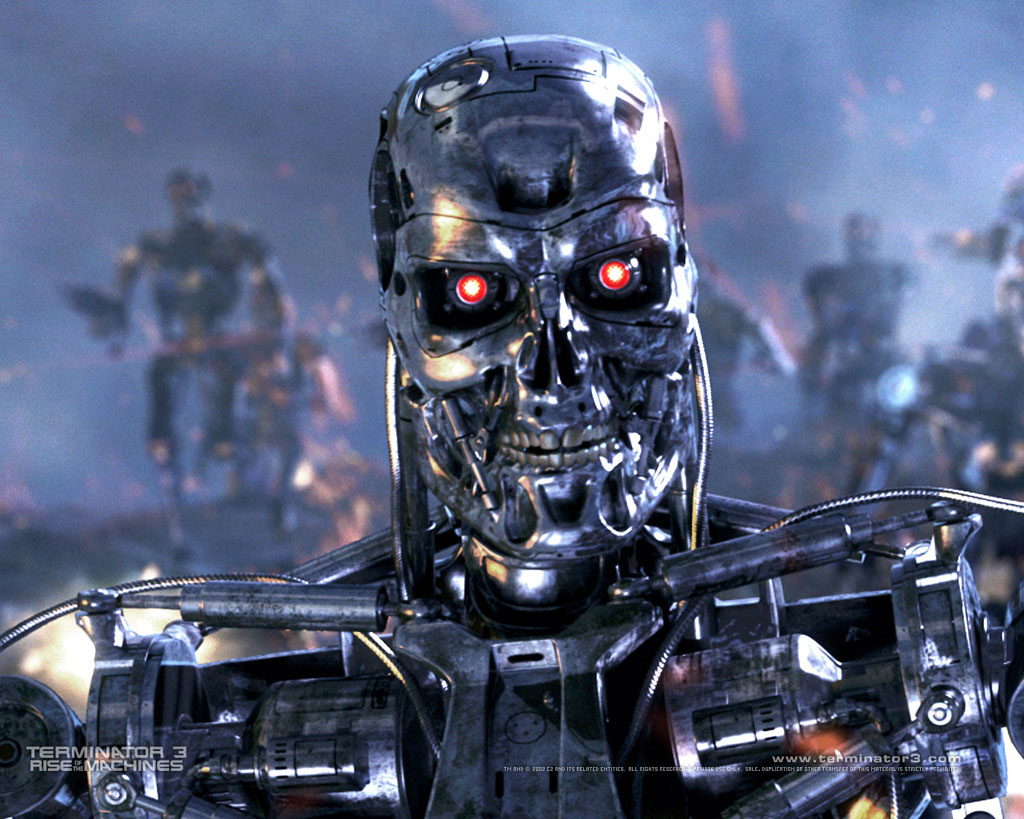
Things are perhaps more than a tad predictable in War Games, but it’s a suspenseful movie with just enough coming-of-age moments for Lightman to keep us cheering for him.  It’s a classic geek story with a likable, nerdy hero who gets the girl in the end, and despite some over-the-top performances here and there (not to mention the very idea of putting nuclear launch capabilities solely in the hands of a computer…*ahem*  I’m looking at you, James Cameron), War Games is an enjoyable film whose message still holds up today, even if our cultural zeitgeist is more focused on terrorism than nuclear war.  And it might not be long until the two become one and the same, so perhaps the message is in fact just as relevant now as it ever was…

Rating:[Rating:4/5]