Avatar is not a movie. It is an experience. It is a thoroughly engrossing cinematic wonder, mighty and powerful to behold as it grips you with images and sights too incredible to believe, while simultaneously touching you with a tender story that is, at its most basic level, a simple tale of star-crossed love–the kind of tale which has been told for generations upon generations and is as old as time itself. Avatar is a technological marvel, while thoroughly obliterating the barrier between technology and reality. Avatar is a film unlike any I have ever seen.
Perhaps it’s the adrenaline talking here, as I left the theatre not more than a half hour ago, and am still trying to process just what it was that I saw. Perhaps it’s my admiration for James Cameron. Perhaps it’s my inner sci-fi fanboy being set loose once again–the same force that caused me to go see The Phantom Menace more than ten times in the theatre, just because it was Star Wars. Or perhaps, perhaps, Avatar really is that good.
Before discussing the storyline, I have to first deal with the planet itself. All the action of Avatar takes place on Pandora, a world far from here that is a mixture of ecologies unlike anything seen in film or art. To call it a jungle would be like saying the Mona Lisa is just some painting. Pandora is as rich and full of life as any locale here on earth, and is inhabited by animals, trees, and human-like beings so realistic there is literally nothing to distinguish them from any of the visual elements of the movie that actually are real. This is computer-generated imagery the likes of which has not been seen. Ever. If Weta Digital’s creation of a thoroughly realistic Gollum was a foot in the door, showing us what was possible with computer graphics, the world and creatures of Pandora take that door and blow it to kingdom come.

Jake Sully and Col. Miles Quatrich examine the village the Na'Vi call home.
After this, anything is possible.
To be clear: every frame, every single frame, of what I saw onscreen last night displayed more life, depth, and richness than what I thought was possible in any given movie as a whole. I don’t know how James Cameron thought of this world, but he serves up vistas so grand and stunning, supported by creatures so fair and delicate (the floating “seeds” that come down from one special tree are exquisite wisps of life that look so real you will try to reach out and touch them), that it feels as if you aren’t watching a movie, but living right alongside the Na’Vi as they explore the planet of Pandora.
If one could level any criticisms at Avatar, it would be for the fairly lightweight story: Â humans = bad, native peoples = good. Â Humans want a precious mineral that resides underneath the Na’Vi’s main village, they must either convince them to leave or force them to leave. Â Since the humans are mostly a military bunch, headed by a greedy corporate honcho and a trigger-happy Marine commander, and since this is also a James Cameron movie, it’s a foregone conclusion from the get-go that the two forces will end up battling each other rather than just talking their way out of the mess. Â But rather than say the story is simplistic, I would describe it as simply uncomplicated. Â No labyrinthine plotlines or story mechanisms are required here: Â Cameron simply asks us to watch as he lets his world unfold before our eyes, to see marine Jake Sully fall in love with Neytiri, the Na’Vi who helps Sully’s avatar learn the ways of her people.

Sully's avatar experiences the floating seeds of Pandora.
Some movies are fun to see in a theatre because of the loud volume, big screen, and excitement of the crowd. Â Avatar is a film that must be experienced in a theatre, especially one that has a 3D projector. Â Cameron uses the third dimension to eliminate any last vestige of reserve that might exist in the viewer’s mind that this world is imaginary. Â There are no cheap gimmicks here, or things flying at the viewer just for the sake of doing it in 3D. Â No, the 3D element renders the movie completely, utterly immersive. Â A believable depth of field surrounds the viewer, and everything from smoke and dust particles to missiles exploding and trees collapsing takes place in all three dimensions. Â The best special effects, like the best seasoning on a meal, are the ones that are so good the viewer doesn’t even notice them or single them out as effects. Â Cameron’s use of 3D is so elemental to Avatar that you forget it’s there, and become completely enveloped in the experience of it all.
Children enjoy fairy tales partly because they like to entertain the possibility that such fantastical worlds of dragons, fairy godmothers, and magical wizards could really exist. Â Avatar is a fairy tale come to life, and James Cameron invites his viewers to return to their childhood imaginations and believe, for two and a half hours, that the world of Pandora really exists. Â And when I stepped out of the theatre, I was almost convinced it was actually real.
Rating:[Rating:5/5]


 In 1894, H.G. Wells published his novel The Time Machine, which, while short and simplistic, was in interesting thought experiment regarding mankind’s hopes for the future. Wells, a student of Marx, expressed a belief through metaphor that there could never be true equality, and there would always be those above, and those who served them. None the less, he told an ironic tale of how those on top would eventually get theirs.
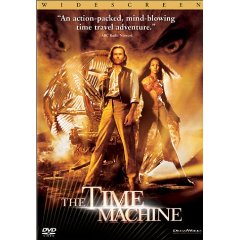 1960. A second version, starring Guy Pierce and Directed by Simon Wells, H.G.’s grandson, was released in 2002. I have yet to meet someone, besides me, who has read/seen all three versions, which is really too bad. People often ask me which version is the best. The truth is, it’s really hard to pick one, because they are all so different, and each one is strangely apropriate to their time. You might say, reading the book and then watching the movies is a trip through time in itself. I’ll explain.
 In the book, the “Time Traveller,†who is never named, believes that if he travels far enough into the future, he will find mankind in a perfect state. No further explanation of this belief is ever given. Wishing to see mankind’s triumph, his first time-trip is a non-stop journey to the year A.D. 802,701. (Does this seem strange to anyone else? I mean, there’s a reason the Wright Bothers didn’t take their first flight over the Grand Canyon, and early sailors didn’t try to cross the Atlantic.) Once he stops, the Time Traveller first meets the Eloi, a society of childlike people. They live in small communities in futuristic yet deteriorating buildings, doing no work and eating a frugivorous diet. His efforts to communicate are hampered by their lack of curiosity or discipline, and he concludes that they are the result of humanity conquering nature with technology, and adapting to an environment in which strength and intellect are no longer advantageous.


 In the 2002 version, which also starts in 1899, the time traveller is Alexander Hartdegen, a physics professor who wants his students to abandon the expectations of society and conquer nature with technology. His fiance, Emma (Sienna Gullory), feels like he’s more attracted to model T cars than to her. Philby (Mark Addy) asks Alexander if he thinks Man could ever go too far whith technology. Alex scoffs “No such thing.†That night Emma is killed by a mugger in the park. He decides to use his skill with technology to change the past and bring her back. He works for four years on a time machine. When it’s complete, he


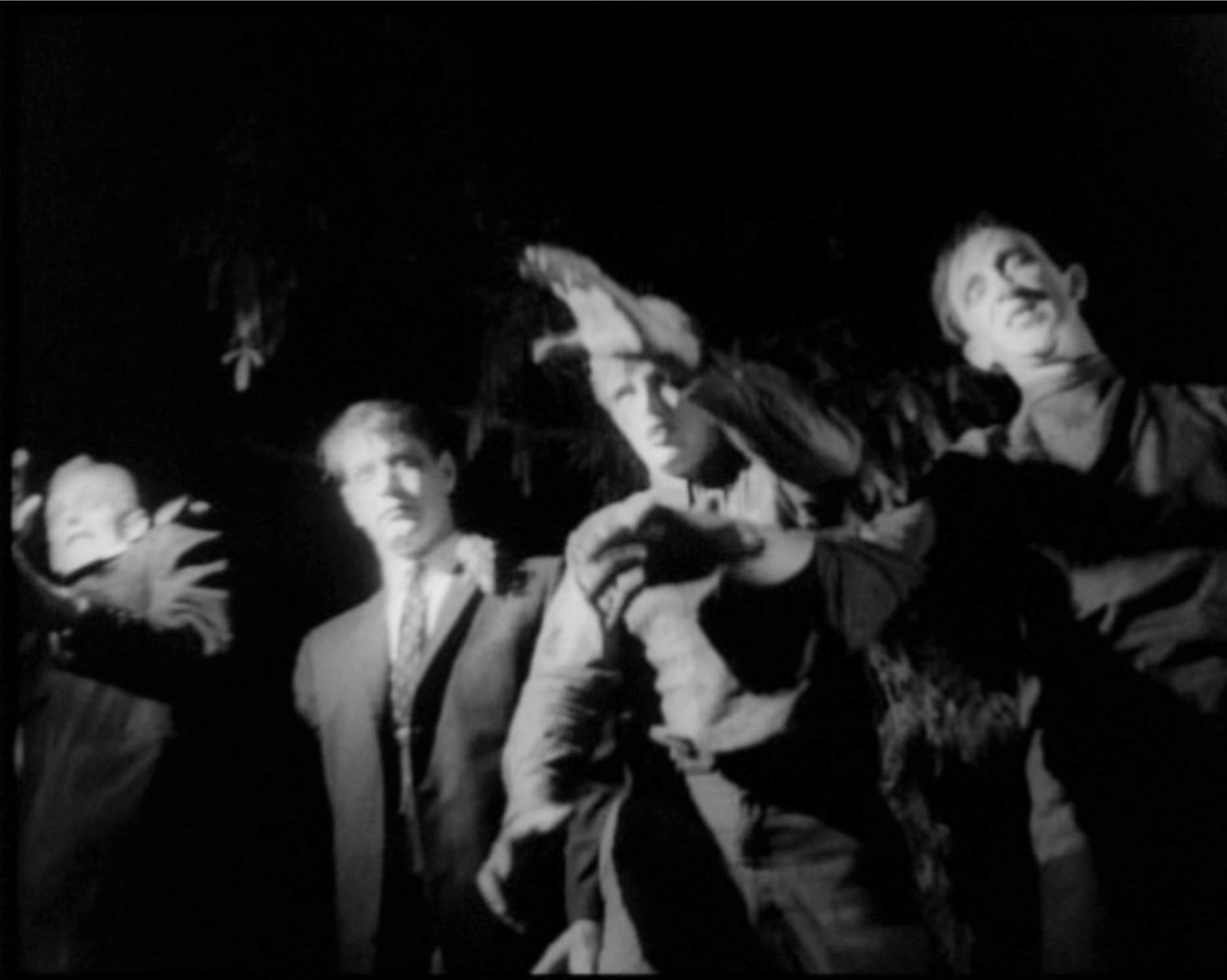
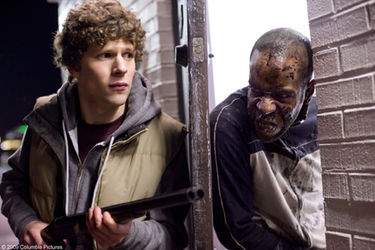
 What is with all these zombie movies?? Is our culture really so morbid that we can’t get enough of seeing human bodies hacked to pieces? Zombieland (Dir. Ruben Fleischer) is only the latest in a veritable flood of ketchup-splattered, limb-laden flicks from the past few years in which humans are transformed into flesh-eating monsters and terrorize the few souls unaffected by the radiation, virus, or whatever.