Welcome to Macintosh

Full disclosure:  I’m a longtime Apple fan.  We got our first computer, a Mac 512K-E, in 1987 when I was seven years old.  Since then I have gone through several Macs with my family, and since moving out when I was in college I have purchased a G3 iMac, G4 eMac, and Intel iMac.  I use a PC at work, and while I am fully capable of transitioning between the two types of computers, I feel much more at home on a Mac.

I thought this documentary, which claims to be “The documentary for the rest of us” (riffing on Apple’s “the computer for the rest of us” slogan from the early 1990’s), would be a nice exploration of the computer company of which I am rather fond, along with the creative minds behind their signature product.  And it’s not that the documentary was bad, or even poorly made, it’s that I went away from it feeling as though there was so much untapped potential, so much brilliant source material, that was left entirely untouched by the filmmakers.

The movie is mostly a series of interviews with people central to the culture of the Macintosh computer, along with a few individuals who helped bring the computer about in its early days and shepherd it along to the well-established niche market it enjoys today.  These people range from software developers to design architects, columnists to analysts, and even the owner of the very first Apple retail outlet (which is two blocks from where my wife used to live near downtown Minneapolis).  There’s even a trip to a Macintosh archive of sorts–several thousand square feet of storage owned by a very devoted Apple fan, who has multiple versions of nearly every computer Apple has ever produced.  All this serves to shed some light on the eccentric culture of Mac-heads, and probably gives the uninitiated a bit of insight, if a little skewed at times, into the culture of Mac owners.

Guy Kawasaki, the highlight interview of the movie.

Guy Kawasaki, the highlight interview of the movie.

Certainly the meat of the documentary is the extensive interview footage with Guy Kawasaki, an early Apple employee who has spent the past few decades working closely with Apple as well as writing several books about the company and other computer subjects.  His thoughts on Apple’s rise in the 1980s, fall from grace throughout the 1990s, and recent return to prominence, are funny, enlightening, heartwarming, and very down-to-earth.  It’s clear that Kawasaki is not blindly waving the Apple banner, and he has several valid criticisms of the company and its leaders, but his place in Apple history affords him the luxury of being imminently qualified to offer his opinion in a way that few others can do.

Careful readers of this review will note a particular absence of names, though:  Jobs, Wozniak, Schiller, Ive, Scully, Amelio, even Gates…the people at the very heart of Apple, who have had immeasurable influence on the company since its founding over 30 years ago.  While I applaud the filmmakers for cobbling together a decent chronicle of Apple, the fact that it is missing the most key players makes the entire project feel hollow.

FirstTech, the original Apple Store, in Minneapolis.

FirstTech, the original Apple Store, in Minneapolis.

Along with the lack of key interview subjects, entire chunks of Apple’s history are either ignored or skimmed over so quickly that they might as well not even be included.  In a stunning move, the entire period following the return of Steve Jobs to the helm of the company (arguably the most important chapter in the company’s history) is presented in a matter of minutes.  iPods, iMacs, iPhones, and other such monumental achievements flash by as a series of images and are subsequently all but ignored.

Rather than spending several minutes discussing product serial numbers with retail store owners, or digging through a collection of Apple ][ machines in a storage shed, or interviewing a bitter ex-Apple employee who still can’t let bygones be bygones, it would have been good to see a documentary that really is for the rest of us.

Rating: [Rating:3/5]

Duplicity

I’m not the best person to review a movie like Duplicity.  There are some individuals who have no problem with zero exposition, flashbacks all over the place, and characters with convoluted backstories that are never really explained.  Those same individuals might praise a movie like Duplicity for being high-minded, or deep and thoughtful, or off the beaten path, or cerebral, or any number of other such adjectives.

Duplicity

Duplicity

I’m not one of those people.

It’s not that I can’t appreciate Duplicity.  I would, if I could understand what in the world was going on.

This tale of backstabbing, double-crossing, and corporate espionage probably sounded great on paper.  It pairs one of the most universally appealing actresses of our time, Julia Roberts, with a somewhat lesser-known but equally solid Clive Owen.  It is directed by Tony Gilroy, who helmed Michael Clayton, the fairly well-executed tale of corporate corruption.  It’s also got one of the hottest go-to actors today, Paul Giamatti.  But somewhere along the line things went off track and the movie ends up being more of a convoluted mess than a thinking man’s Ocean’s 11, which is what it was clearly striving for.

As the movie opens, Clive Owen’s character Ray Koval bumps into Claire Stenwick, played by Roberts, at a party in Dubai.  The two strangers exchange a series of witty quips before promptly hopping into bed (this is Hollywood, after all.  *sigh*) and the next morning Koval wakes up and Stenwick is nowhere to be found.  Turns out the Stenwick is an ex-CIA agent, and Koval is an ex-MI6 operative, and both are just trying to make a buck by conning corporations into unwittingly giving up secret formulas, recipes, product plans, and the like.  Has she been playing Koval, using him to get access to MI6 information?  Did Koval know she was CIA and was he using her the whole time?  Don’t worry, the answers to such questions will only kind of be revealed after many jumps both forward and backward in time, and at the end of the movie the viewer will still be trying to figure out what in the world was going on the whole time.

Seriously, go find Richard Gere and make Runaway Bride 2 before its too late.

Seriously, Julia, go find Richard Gere and make Runaway Bride 2 before it's too late.

The basic gist of the movie is such:  Koval and Stenwick, in a post-cold-war era, have turned to corporate espionage as a way to use their considerable talents of sneakery and deception.  The trick is, though, can two people for whom a mindset of deception is so deeply ingrained, have a normal relationship?  It’s an interesting question, really, but the answer is mired under so many convoluted layers, plots, and subplots, that no satisfying answer is ever really given.  Throughout the movie we see the two of executing, along with a Mission Impossible-type of supporting team, the theft of a secret formula to cure baldness from a pharmaceutical company.

Yes, some heist movies are about money, others are about jewels, and others about artifacts.  This one is about a secret formula to cure baldness.  But it could have been worse:  had they not gone for the baldness cure at the company Stenwick was infiltrating, they would have gone for (wait for it…) the recipe, at the company Koval was busy infiltrating, for a hawaiian-style frozen pizza.

After finishing with Duplicity, and reading over a plot synopsis and asking my wife to give me her take on what it was all about, I suppose I can appreciate the filmmaking a little more.  But with the myriad plot twists, double-crosses, and unresolved conflicts, I just don’t think it makes for  a very entertaining or interesting movie.

[Rating:2.5/5]

The Bucket List

I bet you’ve seen a Rob Reiner film, even if you don’t know it.  One of Hollywood’s seminal dramatic/comedic talents, he has been making movies for decades, and though his name doesn’t have the box-office draw of a Steven Spielberg, Michael Bay, Jerry Bruckheimer, or Gary Marshall, he is like the tortoise to their hares.

Rob Reiner: Director, Producer, Actor

Rob Reiner: Director, Producer, Actor

Time after time he consistently puts out good, sometimes great, movies with well-rounded characters, moving storylines, and usually manages to pull top-notch actors into his projects too.  Consider the following résumé:

  • This is Spinal Tap
  • Stand By Me
  • The Princess Bride
  • When Harry Met Sally
  • Misery
  • A Few Good Men
  • The American President
  • The Story of Us
  • Alex and Emma

This is just an excerpt mind you, and it doesn’t include Reiner’s extensive array of acting and producing roles either.  He certainly has a way of bringing stories to life and infusing his movies with charm, intelligence, razor-sharp wit, and endearing (if not always likable) characters.

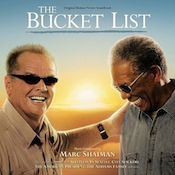
The Bucket List, starring two longtime Hollywood heavyweights Morgan Freeman and Jack Nicholson, is somewhat of a curiosity, especially given its pedigree.  The story is fine, the acting is good, the emotional heartstrings are well-plucked…but something is ultimately missing from this tale of two men making up for lost time.

Freeman plays Carter Chambers, a mechanic with the smarts of a Harvard graduate, who always let life get in the way of following his ambitions.  He has spent his years dutifully providing for his family while allowing his marriage to stagnate and children to grow up with a father (now a grandfather) who is merely existing, not truly living.  While in the hospital recovering from a recent cancer treatment he meets Edward Cole, a Richard Branson-esque billionaire hospital owner (oh, the irony!) who has spent his life in pursuit of fleeting pleasures and the almighty dollar, at the expense of a family or any real personal relationships.  Cole, wonderfully brought to life by Jack Nicholson who provides the right balance of dark humor and sarcasm, convinces Chambers to write down the things he has always wanted to do before he dies, and as soon as the two of them are well enough to leave the hospital, the take off for a jaunt around the world crossing items off their “bucket list.”

From then on the movie plays out like a road trip comedy, but without a destination there is simply an exploration of the two men and their growing friendship, renewed sense of vigor for life despite facing imminent mortality, and unwillingness to deal with shattered family relationships.  Freeman, channeling his Shawshank Redemption character Ellis Redding, is somewhat of a spiritual mentor-slash-guidance counselor for Cole, who (betcha didn’t see this coming…) can buy anything he wants but feels more alone and empty than ever.  As they crisscross the globe going on a safari, visiting the pyramids, and indulging in the finer things in life, I kept on wishing there was more of a connection between the characters.  The two grown men are brand new best friends who know virtually nothing about each other–kind of like a geriatric version of High School Musical, minus the singing and dancing.

Skydiving when youre 70?  Better late than never...

Skydiving when you're 70? Better late than never...

Without missing the forest for the trees, though, there is a lot to like about Reiner’s film.  While many Hollywood movies celebrate the fleeting glory of self-indulgence and living for the moment, consequences-be-darned, it’s refreshing to see a movie whose central characters look back on life and come to the conclusion that they would have been better off living for the good of others.  I also appreciate that a central part of Chambers’ life and family relationships is his faith in Jesus Christ, and he is even seen leading his family in a very sincere dinner prayer near the end of the movie.  And while I’m on somewhat of a high moral soapbox here, let me also praise Reiner for extolling the virtues of a monogamous marital relationship.  While Chambers and his wife do not have the perfect marriage, they are committed to each other and to their family, and Chambers even says that he has never been with another woman in his life (in many ways the opposite of Reiner’s earlier protagonist Harry Burns).

Aside from a few problems with the script, The Bucket List is an entertaining but often sad look at what it means to have a life well lived, and tugs at the very heartstrings so masterfully plucked by masters of the genre like Frank Capra.  In fact, I daresay that Capra himself would probably be proud of Reiner’s film.

Taken

Here is the entire premise of Taken (which, incidentally, is not unlike the premise of a Mario Bros. video game):

Girl gets kidnapped.  Dad goes to save her.

While some movies would take that simple yet classic idea and slap on a host of possibly-gratuitous extras like a wisecracking sidekick, romantic subplots, globetrotting, backstabbing, and twist endings, Taken does one thing and one thing only, and that is to fulfill the expectations of its thesis.  Surprisingly enough, it not only works but works very well, thanks in large part to an incredible performance from Liam Neeson as the father, Bryan Mills, who is desperate to save his daughter.

Penned by the brilliant Luc Besson (whose writing credits include Leon, The Fifth Element, and Taken’s spiritual predecessor The Transporter), the script succeeds marvelously because it provides such a unique and pure motive for Mills.  His daughter Kim, played by the capable but unremarkable Maggie Grace, is kidnapped not by drug kingpins for ransom, or by an old comrade bent on revenge for a past wrongdoing, or by a shadowy corporation who is using her as leverage in order for him to do their bidding.  Instead she is taken by a group of human traffickers who are in the business of selling young girls as prostitutes to the highest bidder.  This not only lends a great deal of weight and seriousness to the subject matter of the movie, but provides an emotional engagement for the viewers unlike most movies of this type.

Bowser and Princess Peach? Almost...

In some ways, watching Taken is like watching an extended episode of 24.  Mills, a highly trained government agent who has retired in order to live closer to his estranged family, makes Jack Bauer look like Rainbow Brite.  He punches, kicks, jumps, shoots, and drives his way through so many people on the way to rescuing Kim that the body count would provably rival that of Commando.  Mills is ruthless, like his CTU-based counterpart, but the consequences of failure are greater, from an emotional standpoint, than the apocalyptic scenarios portrayed so often in 24.  However, Mills and Bauer (along with hundreds of action stars before them) obviously went to the same bullet-avoidance training seminar, as dozens of pistol- and uzi-wielding foot soldiers are capable of inflicting anything more than a papercut, even at point blank range.

The cinematography, like most action movies since the early part of the decade, follows the Jason Bourne playbook to a tee:  cuts are fast and frantic, action is dimly-lit, and fistfights are more editing than choreography.  This style works well here, and doesn’t have the nauseating side effects of some other action movies.  An interrogation scene is thrown in almost as an afterthought, but mercifully is nowhere near as wince-inducing the one in Casino Royale.

Who would win in a fight between Chuck Norris and Bryan Mills? Honestly, it would be close.

All the comparisons to other movies and TV shows are necessary when reviewing Taken because, although it is a very good film with a solid and emotionally engaging plot, a hero with whom we can empathize, and a enough action to satisfy any Die Hard or Lethal Weapon fan, it brings nothing new to the table and ends up being something of a “greatest hits” collection of the best its predecessors in the genre have to offer.  Perhaps the biggest surprise it does have, though, is Liam Neeson.  He has always been one of my favorite actors–a classy person who picks great roles, like Tom Hanks or Julia Roberts–but I have never seen him quite like this.  He is entirely convincing as Mills, and pulls off the high-speed action this film requires without missing a beat.  While others could have played the role, Neeson became the role, and that makes all the difference in the world.

Heroes: Season 1

Here’s the story…

For a long time, people have been telling me and my wife about this show called Heroes.  “It’s kind of like X-men,” they would say.  Friends would tell us how good it was, how new and different and interesting it was, and how much we, being fans of Star Trek, Firefly, and sci-fi in general, would really enjoy it.  But we were always caught up in DS9, Enterprise, 30 Rock, or some other such show that found its way to our door or computer screen courtesy of Netflix.  Heroes sounded interesting to us, but never a whole lot more, despite the glowing reviews from so many people we knew.  Nevertheless, we dutifully placed Season 1 in our Queue and let it sit for months on end…

Ah, how things can change…

After moving to a new town, without any Netflix discs on our kitchen counter, my wife and I decided to take a stroll through our Instant Queue and see what might strike our fancy.  Sure enough, Heroes popped up, and we decided to give it a shot.  “After all,” we thought.  “What’s the worst that could happen?”

And oh, what a ride it has been.  Heroes has gone from odd curiosity to one of the best shows I can recall watching in recent memory, even though the end of Season 1 had several failed attempts to reach the bar that was set so high early on.  It’s an extremely compelling mix of sci-fi and personal drama, set against the modern, post-9/11 backdrop of New York, Los Angeles, Las Vegas, and a few other towns as well.  The plot of Season 1, revolves around a half-dozen or so main characters, each with his or her own struggles, trials, and backstory, who are slowly realizing they have powers and abilities that are, well, super.

Sylar, a brilliantly-conceived villain played impeccably by Zachary Quinto.

Sylar, a brilliantly-conceived villain played impeccably by Zachary Quinto.

What gets me about Heroes so far is how well everything is executed and realized.  Each character is intertwined in an epic storyline about saving New York from being exploded by a shadowy figure known only as Sylar.  After several episodes these individuals start to realize that they have powers and abilities such as flight, regeneration, time-control, and others, but don’t necessarily know how to control them or, more significantly, what to do with them.  As viewers, we know that each of these individuals will play a key role in saving New York, but we are unsure exactly how.  And neither are they.  In fact, each character has his or her own storyline that is, in most cases, entirely separate from the others.  It’s as if we are watching several entirely different stories slowly unfold, but it’s actually one story woven from a myriad of threads, of which we are only seeing bits and pieces at a time.  What I find remarkable about this type of multi-threaded storyline is that it rarely feels contrived.  The way in which characters do eventually cross paths seems entirely organic and believable–entirely the opposite of so many shows and movies wherein a cheap plot device is invented solely for the purpose of bringing characters and events together (worst offender of all time:  The Little Mermaid II.  The villain had been killed off in the first movie, but out of nowhere “Ursula’s crazy sister,” as Sebastian the crab shouts when she first shows up, comes to wreak havoc on the seadwellers).

The cast of Heroes includes a slew of veteran TV and film actors, the most surprising of which is Ali Larter, playing a role that is one of the most difficult in the entire show.  Milo Ventimiglia, well known for his role as Jesse on “Gilmore Girls,” turns in a very

Claire Bennett, a cheerleader who has no worries about being accidentally dropped.

Claire Bennett, a cheerleader who has no worries about being accidentally dropped.

strong performance as Peter Petrelli, the gifted but troubled central character around whom much of the storyline revolves.  A Japanese comic-book-loving man named Hiro (get it!), played by Masi Oka, lends some much-needed lighthearted relief to a show that is often very dark and dripping with blood-soaked themes of betrayal, revenge, and murder.  There’s even an extended appearance by none other than George Takei near the end.  The villain Sylar, though, is a triumph of writing and good storytelling:  for the first third of the season he is a being, a presence, shrouded in mystery and darkness–much like the Xenomorph in Ridley Scott’s sci-fi masterpiece Alien.  His motives, his backstory, and his raison d’etre are slowly and carefully revealed throughout the course of the show so that by the end his sinister plans are even more horrifying than when he was only a shadow.

Near the end of Season 1 it becomes apparent that things will not wrap up neatly, as I had hoped earlier on, and several holes are deliberately left open for follow-up storylines in Season 2.  While I understand the desire to grow and nurture the seeds of a franchise, I actually felt a little cheated at the end of the season–expectations

Noah Bennett.  Hmm...I wonder if his first name carries any symbolism...

Noah Bennett. Hmm...I wonder if his first name carries any symbolism...

had been set, endgames had been established, and things were thrown into the mix that had no bearing on earlier, well-established plotlines.  Superfluous characters started showing up, most namely a shapeshifter who also has the entirely gratuitous and never-utilized ability of (I kid you not) engaging in online AIM chats using only her brain.

Still, Season 1 of Heroes does a good job of establishing a very compelling set of characters all woven into one brilliant, if at times poorly-realized, plot of epic proportions.  With loads of homages and out-and-out references to comic books, science fiction movies (my favorite being when Hiro, in utter disbelief of the weight of what lies before him, borrows a quintessential exclamation from “Back to the Future”), and classic hero/villain tales, it is a far deeper and more mysterious show than it has any right to be.  Morpheus once offered Neo the chance to see how deep the rabbit hole goes, and in Heroes we have a rabbit hole that is far deeper and more complex than anything I have seen on TV in a long time.  A very long time.

King of Kong: A Fistful of Quarters

Some subjects are just not what people would think of as being fruitful grounds for a documentary.  Take the premise of King of Kong: A Fistful of Quarters.  It’s about a guy named Steve Wiebe, a regular dude who is a little down on his luck and decides to go for a high score on Donkey Kong.  Yes, that Donkey Kong.  Turns out he has a knack for the game, and decides that he wants to be at the current record holder, a hot sauce and restaurant entrepreneur named Billy Mitchell who has held the top score since the mid-80’s.

Not exactly Oscar-worthy source material.

What makes this documentary not only work, but shine, is its unrelenting focus not on video games, but on video gamers.  Specifically the odd, quirky subset of video game players who continually try to best each others’ high scores on classic 8-bit video games.  We’re talking about people with wives and kids and real jobs who spend their time playing games like Galaga, Breakout, and Donkey Kong for hours and hours at a time just to get a higher score than someone else.  And in the middle of it all is Walter Day, a former oil executive who now spends his days keeping track of official video game high scores.

You can’t make this stuff up, folks.

As we follow Steve Wiebe on his quest to beat the Donkey Kong high score (just writing that seems a little odd) we get to know several of these peoples, and come to respect and even admire their devotion to games that few people in the world even play anymore.  Mitchel, whose self-confidence is so over-the-top he reminds me of a real-life White Goodman, soon gets word of a challenge to his high score and makes it his personal mission to make sure he remains the record holder at any cost.

Does all this sound just a little weird to you?

Yes, this man can kick your butt at video games.

Yes, this man can kick your butt at video games.

If so, that’s kind of the point.  But far from being exploitative or demeaning, King of Kong treats these competitive video gamers as if they were Kobe Bryant and Michael Jordan.  Wiebe is as dedicated as any professional athlete, and displays concentration and stamina that could rival any Olympic athlete in the pursuit of his goal.  And when he arrives at the actual Twin Galaxies arcade to play Donkey Kong for a live audience to prove his skills to an unbelieving community of competitive gamers (Mitchell’s record had not been broken for almost 20 years, so one can understand their skepticism), and a tape sent by Mitchell is unveiled that shows him beating his own high score is unveiled, the injustice of it all is almost too much to bear.

Billy Mitchell: 8-bit video game chapion and homemade hot sauce salesman.

Billy Mitchell: 8-bit video game champion and homemade hot sauce salesman.

And that is exactly why this documentary is a success:  it draws the viewer into this very strange subset of video gaming culture so deeply, and involves us on such an emotional level with the key players involved, that it might as well be the story of an underdog NFL team on its way to the Super Bowl.  Though like many documentaries, facts were somewhat blurred to accomplish this type of audience empathy.  A rivalry between Wiebe and Mitchell that is shown onscreen is actually far from the truth, and the two men have repeatedly stated that they are friends and were always on much better terms than what was shown in the movie.  And sometimes director Seth Gordan movie does cross the line a little bit with Wiebe’s family.  Footage and interviews with his wife and kids at times seems a little too much like tabloid TV than investigative documentary, and I have to wonder how much the interviews with his wife were selectively manipulated to show a lack of confidence in her husband that may or may not have been real.

Still, I highly recommend this fun, quirky, and very entertaining documentary, whether blocky, outdated video games are your thing or not.  Wiebe’s persistence is inspiring, and the glimpse into competitive video gaming is so compelling one can’t help but watch.

Man vs. Food (S01E1-5)

Believe me, I was not planning on making this show part of my daily routine.

When I eat breakfast I usually watch 20 minutes or so of a movie, and lately they have been documentaries.  After tackling some pretty heavy stuff recently, I stumbled across this odd little gem of a show on the ol’ Netflix queue.  So far it’s pretty entertaining, kind of interesting, and best of all, each episode is almost exactly 20 minutes long–just enough time for me to chow down my Cheerios and OJ while, ironically, watching a guy chow down on lots and lots of food.

Adam Richman, about to take on one of the many food challenges in the show.

Adam Richman, about to take on one of the many food challenges on the show.

And really that’s the gist of the show:  Adam Richman, a low-profile actor and self-proclaimed food enthusiast, goes around the country (possibly the world, but not so much as of the time I’m writing this) looking for the best eating establishments, often with crazy food challenges, in whatever town or city he happens to be in.  It’s kind of an odd show for the Travel Channel, but I think they get away with it because the concept is based around Richman, well, traveling.  Each episode shows him visiting three restaurants in a given location (Amarillo, Texas; Pittsburgh, Pennsylvania; etc.) and chatting it up with the owners, cooks, and waiters about the dishes and specialties they serve.  The places are hole-in-the-wall joints that might not look like much on the outside, but cook up the stuff of local legend.

The climax of each episode has Richman tackling a legendary local food challenge like eating a 7-pound hamburger, 4.5-pound steak, six of the spiciest hot wings in town, and so on.  Sometimes he wins, sometimes he fails, but it’s always enjoyable to watch as he interacts with the wait staff and restaurant patrons on his way to winning the challenge and collecting that location’s ultimate trophy (usually a T-shirt, photo on the wall, or bumper sticker).  He will often talk with the manager or head cook of whatever restaurant he happens to be taking the challenge about what goes in to the preparation of the meal, and sometimes try his hand at cooking it up himself.

One of Richmans many food challenges.

No way would I ever try this.

I appreciate that the show isn’t just about one man’s journey of gluttony, but a real exploration of the culture and customs of a particular area of the country.  A visit to Columbus Ohio had Richman taking part in some pregame OSU football tailgating and visiting a generations-old sausage joint, not only for the food but to get a feel for the local community.  But for a show like this, with such a bare-bones concept, to work it must have one key ingredient:  a likable host.  And Richman fills that duty in spades.

In fact, one of the most compelling reasons for me to keep coming back to this show is to watch Richman interact with the other people around him.  His indelible charm is infectious, and he is clearly having a good time as he jokes around with the cooks and waiters.  Anton Ego he is most certainly not – he is just out to chow down on some grub, meet lots of interesting people, and hopefully get his name or photo on the wall after conquering a ginormous sandwich or beef brisket.  And while some have criticized the show for its positive portrayal of American overindulgence, I see it as harmless escapism.  Richman is eating the foods and taking the challenges so we don’t have to.  Though he sure does make it fun to watch.

Edit 1/19/10: Having finished watching Season 1 I have nothing substantive to add to this review, but wanted to reiterate how much I continued to enjoy the show.  Richman’s everyday-dude schtick never gets old, and I appreciate how complimentary and thoroughly positive he is to everyone around him:  the chefs, the waiters, the patrons, and even the viewers.  Even during the final episode of Season 1, when he was comparing Juicy Lucy hamburgers at competing restaurants, he had good things to say about both and managed to find a clever way of praising both without actually declaring a winner.  It’s vignettes like this that make the show as classy as it is greasy.

John Adams

It’s all about the teeth.

Aside from the brilliant acting, spectacular setpieces, and sweeping epic scale of HBO’s John Adams, it’s the teeth that stand out more than anything.  To wit: as people age, so do their teeth, and in days long gone when toothpaste and mouthwash were as common as combustion engines and power tools, the older one got, the worse his teeth looked.  But in too many historical movies, be they epics or simple homespun character tales, nary a yellowed bit of enamel is to be found.  Be it Braveheart, A Knight’s Tale, The Passion of the Christ, or even post-apocalyptic movies like Terminator Salvation and Waterworld, nothing destroys the carefully crafted immersive quality of a film like gleaming pearly whites.

In John Adams, teeth are just one of a host of details used to create the most realistic representation of a historical time period I have seen since the BBC’s Pride and Prejudice.  Teeth are dirty, stained, and deteriorate over time, and this adds a level of realism rarely seen in movies today.  Every bit of early America is meticulously recreated onscreen in this masterwork of cinematography, and each scene is held together by the strength of Paul Giamatti’s acting as he portrays one of the most important figures in American history:  our second president himself, Mr. John Adams.

John and Abigail Adams, played by Paul Giamatti and Laura Linney.

The miniseries opens with Adams being asked to, of all things, represent a group of British soldiers who had fired into a crowd of unruly colonists.  Opening with this event, as opposed to other defining moments in Adams’ life or early political career, is a stroke of brilliance as it sets the tone for the rest of the eight-hour show:  this is not the John Adams we are used to reading about in textbooks.  This, we soon find out, is the real John Adams–the one who struggled with personal doubts, continually strove to prove himself, argued with his wife and dear friend Abigail, had severe fallings-out with his children, and fought tooth and nail to hold the fragile democracy together that he was so instrumental in creating.

Throughout the course of the series we are presented with an array of events that not only shaped the course of our nation, but affected Adams on a very personal level.  In the early days of the continental congress we see Adams bicker with delegates over the very idea of proposing independence, and we begin to realize that the picture of our early days is not nearly as rosy as we may have been led to believe by our schoolbooks.  The declaration of independence, written mostly by Adams’ friend Thomas Jefferson, was not signed in a neat little ceremony with all the representatives of the colonies gathered happily together in Philadelphia.  We see the revolutionary war through the eyes of soldiers and commoners who fought hard and bled harder.  A bitterly real plague of smallpox, from which Adams’ family is not immune, cripples New England.  In the years following the revolution we see Adams muddle along as a diplomat to France and the Netherlands, striving so hard to represent his country while not becoming mired in the pleasantries and ceremonies which, in his view, only hampered real diplomacy.  We see his lonely days as Washington’s vice president, his bitter term as president, and finally his waning years at his Peacefield home in Massachusetts.

David Morse, grateful that he got to keep his real teeth for the role.

But the sheer scope of this movie would be nothing without characters big enough to fill it, and John Adams fulfills this in spades.  George Washington, played impeccably by David Morse, was a real man with real struggles and doubts, not the cherry-tree-chopping saint most of us have read about since childhood.  Benjamin Franklin, far from the kite-flying inventor we have come to know, was a diplomat through and through–loathe to take sides even in the heady days of our revolution, and indulging far too much in the pleasures afforded him as an ambassador to France.  We also see, played with exquisite realism, other figures such as Thomas Jefferson, Alexander Hamilton, John Hancock, Benjamin Rush, and other founders of our nation who are as brilliant and thoughtful and scheming and conniving as any politician today.

Through it all, though, is Adams’ rock.  His anchor.  His light in times of trouble.  His wife, Abigail, who struggles through years of separation from her husband while he is overseas in France, and not only raises their children on her own but stays fiercely devoted to her husband.  Such a character requires an actress who is not only brilliant and strong, but able to display these traits without losing an ounce of her femininity–a bra-burning militant she most certainly was not.  Laura Linney rises to the challenge of portraying one of America’s foremost females with dignity and grace, and in doing so presents one of the most astounding portrayals of a historical figure I have ever seen.

Contemplating the consequences of declaring independence.

John Adams is a force, to be sure, but much of the movie consists of long scenes of protracted dialog–often about political matters or national affairs.  The jumps between time periods are also a bit startling:  one moment John Adams is being elected, and the next he is arriving at the construction site of the white house, with nothing to indicate the passage of years other than grayer hair and tattered clothes.  Much of the actual family drama is merely hinted at, and the conflict with Adams and his youngest son draws to an unfortunate conclusion without ever really being built up enough in the meantime.

Still, this miniseries will stand among the great historical epics, and the way in which it brings a sense of realism to our founding fathers is so powerful it should be mandatory viewing in any social studies classroom.  In a scene near the end, Adams is presented with a painting of the signing of the Declaration of Independence.  Incensed, he tells the artist it is terrible, as such a picturesque scene never took place.